After Dr. Eleni Michailidis
delivered a stillborn son, she and her husband sought to honor their
infant and the experience. She tells her story in this video.
This is a moving video -- from the heart.
This is a repository for material dealing with the experiences of dying people, grieving relatives and the care givers that attend them. It is a supplement to a Williams College course on Death and Dying that was held during January 2015.
Tuesday, June 23, 2015
Saturday, May 30, 2015
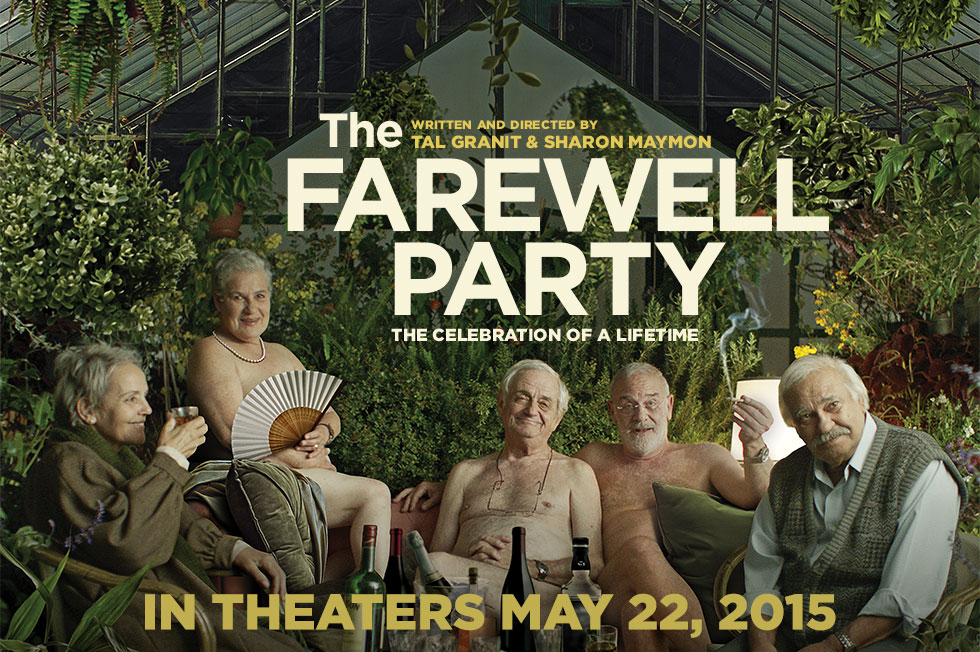
The Farewell Party
From the NY Times Review by Stephen Holden
“The Farewell Party,” an Israeli comedy about euthanasia,
steers a careful course between humor and pathos while playing down overtly
political and religious arguments for and against assisted suicide. The first
feature of its creative team, Tal Granit and Sharon Maymon, “The Farewell
Party,” which won them an Ophir Award (the Israeli Oscar) for best direction,
is set in a Jerusalem retirement home in which one resident, an amateur inventor,
devises a “mercy-killing machine.” News of the device leaks to the home’s other
residents. That inventor, Yehezkel, a robust bear of a man (Ze’ev Revah) and
his wife, Levana (Levana Finkelshtein), a couple in their 70s, are distressed
by the acute suffering of their friend Max (Shmuel Wolf), who is dying of
cancer and against his will is kept alive by doctors. Max’s wife, Yana (Aliza
Rozen), entreats Yehezkel to assist Max, however he can, in ending his agony.
I have not seen this yet.
Sunday, May 17, 2015
An Unpleasant Truth About Youth Suicide?
Joe Flood, an English teacher at Pine Ridge, tells an
important story.
Suicide epidemics come to the Pine Ridge reservation every
few years with varying degrees of national media attention and local
soul-searching. What the news media often misses though, and what tribal
members understand but rarely discuss, is that youth suicides here are
inextricably linked to a multigenerational scourge of sexual abuse.
This is an insightful and important essay that has relevance
to First Nations people and other youth suicides.
May 17, 2015 New York Times
Saturday, May 16, 2015
The Last Days of Her Life
When
Sandy Bem found out she had Alzheimer’s, she resolved that before the disease
stole her mind, she would kill herself. The question was, when?
"Sandy Bem, a Cornell psychology professor one month shy of her 65th
birthday, was alone in her bedroom one night in May 2009, watching an
HBO documentary called “The Alzheimer’s Project.” For two years, she had
been experiencing what she called “cognitive oddities.”
NYTimes article Sunday Magazine, May 17, 2015
![]() |
| Sandy Bem and her daughter |
Wednesday, May 6, 2015
Why African American Seniors are Less Likely to Use Hospice
This aired on the PBS NewsHour on May 5, 2015.
"Black seniors are more likely than whites and Latinos to forgo hospice care. Due to deeply felt religious beliefs and a long history of discrimination in the U.S., African-American patients are often reluctant to plan for the end of their lives, and more skeptical when doctors suggest stopping treatment. Special correspondent Sarah Varney reports on efforts to change some of those beliefs."
Why African American Seniors are Less Likely to Use Hospice.
Sunday, April 26, 2015
Three End of Life Poems by Frank Meyskens
Here are three poems by Frank L. Meyskens, Jr.:
Meyskens' books of poetry are:
Aching for Tomorrow (2007) and Believing in Today (2014).
At this link, you can access a PDF of all three poems.
LIFE PANEL
The sickness has revisited
a body wracked, invaded
unremitting, day and night.
Life ebbs, the verdict in.
All systems and technology failing
maxed out with morphine and wonder drugs
vital juices no longer flowing.
Desperate and despondent for hope.
Who should be the jury
no controversy or doubt
that the end is near.
The last great act of living here.
Life closing, shadows abound
Decisions made by a life panel
the one most loved who will
loosen the rope and send me home.
Friday, April 17, 2015
Glenn's Last Tape
When Glenn Scott, a Canadian lecturer, learnt that he had
motor neurone disease (ALS) with its inevitably distressing endpoint, he
decided to commit suicide in the city he loved most, Rome. He would have
preferred the help of a doctor to end his life when he could no longer help
himself, but this was illegal in most countries, so he had to devise a plan to
kill himself while he still had the ability to mix the cocktail of lethal drugs
and drink it.
To draw attention to what he saw as the unfairness of the
current laws on euthanasia, he enlisted the help of actor, Miriam Margolyes,
and documentary director, Karl Sabbagh, to make this documentary - Glenn's Last Tape - that has
never been seen before in the 15 years since Glenn's death, which was recorded
on a camera he had set up and seen here in the final moments of this
documentary.
The video is 38 minutes.
![]() |
| Screen Shot from the video |
Subscribe to:
Posts (Atom)