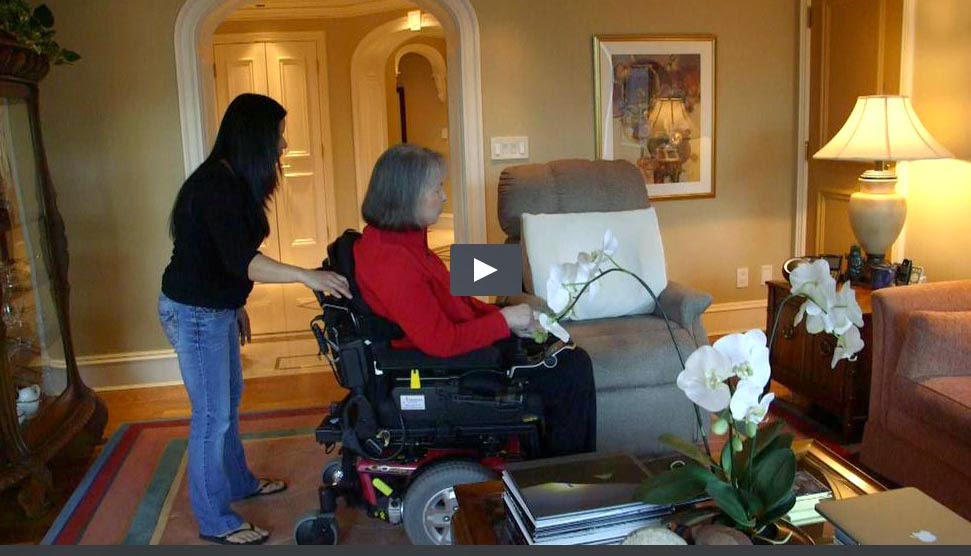
This is a a portrait of the final days of an American with ALS who pursues physician-assisted suicide in the one place where it's legal for
foreigners to come to end their lives: Switzerland. With unique access
to Dignitas, the Swiss nonprofit that has helped more than 1,000 people
die since 1998, The Suicide Tourist follows Craig Ewert as he debates
the morality -- and confronts the reality -- of choosing to die before
his disease further ravages his body, and he loses the option to die
without unbearable suffering.
You Tube link to the PBS/Frontline The Suicide Tourist (First aired in 2007, 52 minutes)
Synopsis.
This is a repository for material dealing with the experiences of dying people, grieving relatives and the care givers that attend them. It is a supplement to a Williams College course on Death and Dying that was held during January 2015.
Showing posts with label assisted suicide. Show all posts
Friday, October 27, 2017
Monday, February 1, 2016
When I Die
An end-of-life doctor faces his own end-of-life from a glioblastoma.
When I Die.
Peter Rasmussen was always able to identify with his patients, particularly in their final moments. But he saw himself especially in a small, businesslike woman with leukemia who came to him in the spring of 2007, not long before he retired. Alice was in her late fifties and lived in a sparsely furnished farmhouse outside Salem, Oregon, where Rasmussen practiced medical oncology. Like him, she was stubborn and practical and independent. She was not the sort of patient who denied what was happening to her or who scrambled after any possibility of a cure, no matter what the cost. As Rasmussen saw it, “She had long ago thought about what was important and valuable to her, and she applied that to the fact that she now had acute leukemia.”
This is an excellent article in the January 2016 Harper's Magazine. It was sent to us by Kathy McKnight.
![]() |
| Dr. Rasmussen and family members |
Saturday, January 9, 2016
Assisted Suicide Belgique
“In Belgium, euthanasia is embraced as an emblem of
enlightenment and progress, a sign that the country has extricated itself from
its Catholic, patriarchal roots.
Belgium was the second country in the world, after the Netherlands, to decriminalize euthanasia; it was followed by Luxembourg, in 2009, and, this year, by Canada and Colombia. Switzerland has allowed assisted suicide since 1942. The United States Supreme Court has recognized that citizens have legitimate concerns about prolonged deaths in institutional settings, but in 1997 it ruled that death is not a constitutionally protected right, leaving questions about assisted suicide to be resolved by each state. Within months of the ruling, Oregon passed a law that allows doctors to prescribe lethal drugs for patients who have less than six months to live. In 2008, Washington adopted a similar law; Montana decriminalized assisted suicide the year after; and Vermont legalized it in 2013.”
A New Yorker article, The
Death Treatment, explores and discusses the Belgian experience. Ananya Mayukha alerted us to an Economist
video, 24 and Ready to
Die, focusing on Assisted Suicide Belgique. At 22 minutes, it is well-worth
watching.
![]() |
| 24 yo woman subject of Economist film |
Thursday, October 29, 2015
Deciding About Dying
This is a meaningful essay in the NY Times by Susan Gubar, a woman living with metastatic ovarian cancer. She speaks from her heart, from "being there."
It begins with this memorable sentence: "We know little about death, after all: There are no survivors to tell the tale. But we do know something about dying."
Saturday, September 26, 2015
When it comes to end-of-life care, perhaps we do need a bigger hammer
by Richard Sontheimer.
While sitting one
evening with my terminally ill elderly mother, she again asked me to help her
end her suffering. This time it was,
“Could you just go get the hammer and hit me in the head?” Her previous
requests had included “Son, you are a doctor, can’t you do something to help me
with this?” And then, “They treat
animals better than this.”
On previous occasions,
I had to remind my mom that we lived in one of the 48 states in the USA that
does not have a death-with-dignity euthanasia law. Her response was, “Then can you move me to
Oregon or Washington?”
Rick Sontheimer is an old friend of mine. His article is well-written, deep and important. You can access it at Kevinmd.com.
Saturday, May 30, 2015
The Farewell Party
From the NY Times Review by Stephen Holden
“The Farewell Party,” an Israeli comedy about euthanasia,
steers a careful course between humor and pathos while playing down overtly
political and religious arguments for and against assisted suicide. The first
feature of its creative team, Tal Granit and Sharon Maymon, “The Farewell
Party,” which won them an Ophir Award (the Israeli Oscar) for best direction,
is set in a Jerusalem retirement home in which one resident, an amateur inventor,
devises a “mercy-killing machine.” News of the device leaks to the home’s other
residents. That inventor, Yehezkel, a robust bear of a man (Ze’ev Revah) and
his wife, Levana (Levana Finkelshtein), a couple in their 70s, are distressed
by the acute suffering of their friend Max (Shmuel Wolf), who is dying of
cancer and against his will is kept alive by doctors. Max’s wife, Yana (Aliza
Rozen), entreats Yehezkel to assist Max, however he can, in ending his agony.
I have not seen this yet.
Saturday, May 16, 2015
The Last Days of Her Life
When
Sandy Bem found out she had Alzheimer’s, she resolved that before the disease
stole her mind, she would kill herself. The question was, when?
"Sandy Bem, a Cornell psychology professor one month shy of her 65th
birthday, was alone in her bedroom one night in May 2009, watching an
HBO documentary called “The Alzheimer’s Project.” For two years, she had
been experiencing what she called “cognitive oddities.”
NYTimes article Sunday Magazine, May 17, 2015
![]() |
| Sandy Bem and her daughter |
Sunday, April 26, 2015
Three End of Life Poems by Frank Meyskens
Here are three poems by Frank L. Meyskens, Jr.:
Meyskens' books of poetry are:
Aching for Tomorrow (2007) and Believing in Today (2014).
At this link, you can access a PDF of all three poems.
LIFE PANEL
The sickness has revisited
a body wracked, invaded
unremitting, day and night.
Life ebbs, the verdict in.
All systems and technology failing
maxed out with morphine and wonder drugs
vital juices no longer flowing.
Desperate and despondent for hope.
Who should be the jury
no controversy or doubt
that the end is near.
The last great act of living here.
Life closing, shadows abound
Decisions made by a life panel
the one most loved who will
loosen the rope and send me home.
Friday, April 17, 2015
Glenn's Last Tape
When Glenn Scott, a Canadian lecturer, learnt that he had
motor neurone disease (ALS) with its inevitably distressing endpoint, he
decided to commit suicide in the city he loved most, Rome. He would have
preferred the help of a doctor to end his life when he could no longer help
himself, but this was illegal in most countries, so he had to devise a plan to
kill himself while he still had the ability to mix the cocktail of lethal drugs
and drink it.
To draw attention to what he saw as the unfairness of the
current laws on euthanasia, he enlisted the help of actor, Miriam Margolyes,
and documentary director, Karl Sabbagh, to make this documentary - Glenn's Last Tape - that has
never been seen before in the 15 years since Glenn's death, which was recorded
on a camera he had set up and seen here in the final moments of this
documentary.
The video is 38 minutes.
![]() |
| Screen Shot from the video |
Wednesday, April 1, 2015
Physician Assisted Suicide in Canada
PBS NEWSHOUR - 04/01/2015
Canada grapples with how to govern a patient’s right to die
This past March, Canada's Supreme Court ruled unanimously that all
Canadians have a constitutional right to have doctors help them die. Special
correspondent John Larson reports from British Columbia on how doctors, patients and politicians are
grappling with how to set rules and eligibility in the next year. (8 minutes 34 seconds)
This is an informative report that well worth watching. Go Canada!!
Monday, March 23, 2015
Stigma Around Doctor-Assisted Suicide Still Lingers
March 22, 2015
In the realms of politics, medical ethics, religion and
technological innovation, assisted suicide is the source of challenging legal
and moral questions, perhaps none more searing than whether doctors ought to be
permitted to usher incurably ill patients into that next room. Should they be
able to help sufferers end their lives by supplying medication that would make
looming death come faster?
Five states, in various forms, countenance doctor-assisted
dying. Others are considering it. In California, legislation to permit such
assistance is scheduled to receive a hearing this week. A lawsuit in New York
that seeks a similar result was filed in State Supreme Court last month by a
group of doctors and dying patients.
The emotional wallop of these issues is self-evident, and it
is captured in a 14 minute NY Times video documentary.
Saturday, February 7, 2015
Canada's SupremeCourt Strikes Down Ban on Aiding Patient Suicide
Canada Court Strikes Down Ban on Aiding Patient Suicide
NY Times, February 7, 2015
Ottawa — The Supreme Court of Canada on Friday [February 6, 2015] struck down laws banning physician-assisted suicide for patients with “grievous and irremediable” medical conditions.
The unanimous decision, which reverses the position taken by the court 22 years ago, came more quickly than expected and might become an issue in federal elections to be held this year.
Also see:
The National Post [of Canada]:
Andrew Coyne: Crossing the Rubicon, Supreme Court seems eerily complacent about ramifications of assisted suicide ruling
and
John Ivison: Conservatives will find themselves on wrong side of public opinion if they fight assisted-suicide decision
Thursday, February 5, 2015
Doctor-Assisted Suicide in New York
Lawsuit Seeks to
Legalize Doctor-Assisted Suicide for Terminally Ill Patients in New York
by Anemona Hartocollis Feb. 3, 2015, New Yuork Times
This is a good article that reviews the topic well. The author makes the point that "aid in dying" is a better term than "doctor-assisted suicide." It's worth keeping as a reference. The work of Dr. Timothy Quill is discussed.
A group of doctors and
terminally ill patients are asking New York courts to declare that doctor-assisted suicide is legal and not covered by the state’s prohibition on helping
people take their own lives.
Under longtime
interpretations of state law, a doctor who helps a terminally ill patient die
by providing a fatal dose of medication can be prosecuted under the
manslaughter statute, which covers anyone who “intentionally causes or aids
another person to commit suicide.”
The plaintiffs argue that
because doctors are already allowed to help terminally ill patients die in some
circumstances, such as when they remove life support, the fact that they cannot
hasten death for other terminally ill patients violates the equal protection
clause of the State Constitution.
Assisted suicide —
advocates prefer the term “aid in dying” — is legal in only a few states,
including Montana, Washington, New Mexico, Oregon and Vermont.
Sara Myers, one of the
patients, has amyotrophic lateral sclerosis, known as Lou Gehrig’s disease. She
uses a wheelchair. Her arms are paralyzed, her breathing and talking are
compromised, and though she can still swallow, she has to be fed.
Ms. Myers, 60, did not
know precisely when she might want help dying. “The line in the sand is
constantly moving,” she said in an interview. But she added, “Knowing you have
a choice means you don’t have to use it.”
Thursday, January 1, 2015
Doctor Loses License Over Assisted Suicided
by Alan Blinder (New York Times, December 31, 2014)
Maryland regulators this month revoked the medical license of an anesthesiologist for helping six ill people, none of whom had terminal conditions, to commit suicide.
The doctor, Lawrence D. Egbert, 87, lost the Maryland medical license he had held for more than 60 years after a disciplinary panel for the Maryland Board of Physicians found that he had engaged in “unprofessional conduct” while working as the medical director for the Final Exit Network, which offers aid to people “who are suffering from intolerable medical circumstances.”
Full NT Times article
(It's clear that some are following in Kevorkian's footsteps)
Monday, October 20, 2014
Ending Live - PBS
"Barbara Mancini was arrested and charged with
helping her dying father kill himself. Anderson Cooper has her story and
more on the end-of-life debate."
This is a well-done. thought-provoking report on assisted suicide.
Ending Life - PBS.
This is a well-done. thought-provoking report on assisted suicide.
Ending Life - PBS.
Thursday, October 9, 2014
Brittany Maynard is a 29 year-old woman with an inoperable glioblastoma multiforme. She has chosen to die Nov. 1, 2014 in her bedroom in Portland, Ore.,
surrounded by family — her mother and stepfather, her husband and her
best friend, who is a physician. She said she wanted to wait until after
her husband’s birthday, which is Oct. 26.
Deborah Alecson found this post. It should stimulate some discussion.
Also see The Brittany Maynard Fund To expand the death-with-dignity options to all.
The PBS News Hour featured Ms. Maynard's case on October 14, 2014. The discussion between Ira Byock (key Hospice and Palliative Care physician) and Barbara Coombs Lee (Compssionate Choices)
Brittany Maynard did end her live in accordance with the laws of Oregon on November 1. Here is her last video (Huffington Post).
Subscribe to:
Posts (Atom)